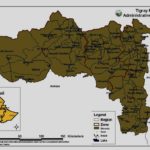
The project will be conducted in Tigrai a region state located 780 kms North of the capital Addis Ababa, Ethiopia, with a total population of 6.7 million people. Administrative, Tigray has Seven Zones, 80 districts, 799 kebeles, 39 public hospitals (two specialized hospitals, 15 general hospitals, and 22 primary hospitals), 216 health centres, 500 private health facilities (hospital, clinic and medical centres) and 712 health posts. Kebele (village) is the lowest administrative unit with an average of 5000 people; and health post is the lowest health institution structure with two community health workers serving for an average of 5000 people. Every household in the village has a family folder in their health post catchment area, describing the basic demographic characteristics of the household members.
The prevalence of HIV in Tigray in 2017/8 was 1.2%, a magnitude higher than the national average (0.9%). There are 147 health facilities providing HIV testing and treatment services in Tigray. Recently, 13 health facilities started to provide an oral HIV self-testing service. Each health facility providing HIV care and treatment services in Tigrai has 1-5 peer educators, who are trained and conduct counselling for non-compliant people diagnosed with HIV. The health care service allocation in Ethiopia (and Tigrai) is based on a defined catchment area. A catchment area refers to group of five villages (kebeles), with a total population of 15,000 to 25,000 people (average of 5,000 households) under the services of five health posts and one health center. Each health post is staffed with two health extension workers. The trial will be conducted in 40 Kebeles, randomly selected from all 7 zones in Tigrai. The Tigray capital, Mekelle, will be the study headquarters to coordinate all sites.