Welcome

The #Disperscapes Project is an Australian Research Council (ARC) funded project that aims to better understand the role of climate and environment on the dispersal of our hominin ancestors as they moved throughout Southeast Asia and into Australia during the Late Pleistocene. Directed by A/Prof Mike Morley, #Disperscapes is devoted to using a novel geoarchaeological approach to reconstruct site and catchment environments in analyzing key archaeological and fossil sites from across Southeast Asia and Australia in order to better understand local palaeoenvironmental and palaeolandscape data as they pertain to hominin movement throughout these regions.

Gathering geoarchaeological data from a range of sites across Indonesia, Malaysia, Laos, and Australia, our goal is to reconstruct the landscapes and environments to better understand the how, why, and when of hominin expansion into Southeast Asia and Australia. It is these data generated with cutting-edge scientific analysis, that will provide important context and a greater understanding of the movements of our ancestors and how they would have interacted with the environments which they encountered.
Learn More!

Explore the site further and learn more about the team, our sites, and the techniques we often employ!

Project Aims

Although there is still robust debate regarding the mode and tempo of modern human (Homo sapiens) dispersals out of Africa , a growing body of evidence suggests that this process occurred in a series of waves, beginning ~120,000 years ago and possibly earlier. But was this pulsed expansion driven by extrinsic factors such as shifts in Quaternary climate, or were intrinsic human biological, cultural or cognitive evolutionary processes providing the motivation? Recent research suggests that waves of human dispersal from Africa correlate with orbitally-tuned climatic fluctuations , presenting climatically favourable windows allowing expansion into viable habitable landscapes. Once out of Africa—on the fossil evidence to date—modern humans arrived in Southeast Asia and Southern China from around 100,000 years ago. Were environmental factors similarly driving that continued expansion eastwards, pulsed in concert with these windows of opportunity?

The overarching aim of Disperscapes is to reconstruct the local landscapes and environments – ‘ground conditions’ – encountered by waves of early modern human trail-blazers as they dispersed into Southeast Asia en route to Australia. By employing state-of-the-art geoarchaeological analyses to examine archaeological sediments and generate environmental data, we can explore how, why and when our ancestors established themselves in Southeast Asia. And by analysing archaeological sediments we will provide a direct link between Quaternary landscape dynamics and human occupation of key archaeological sites distributed along a transect of environmental, climatic and ecological variability.

Objectives:

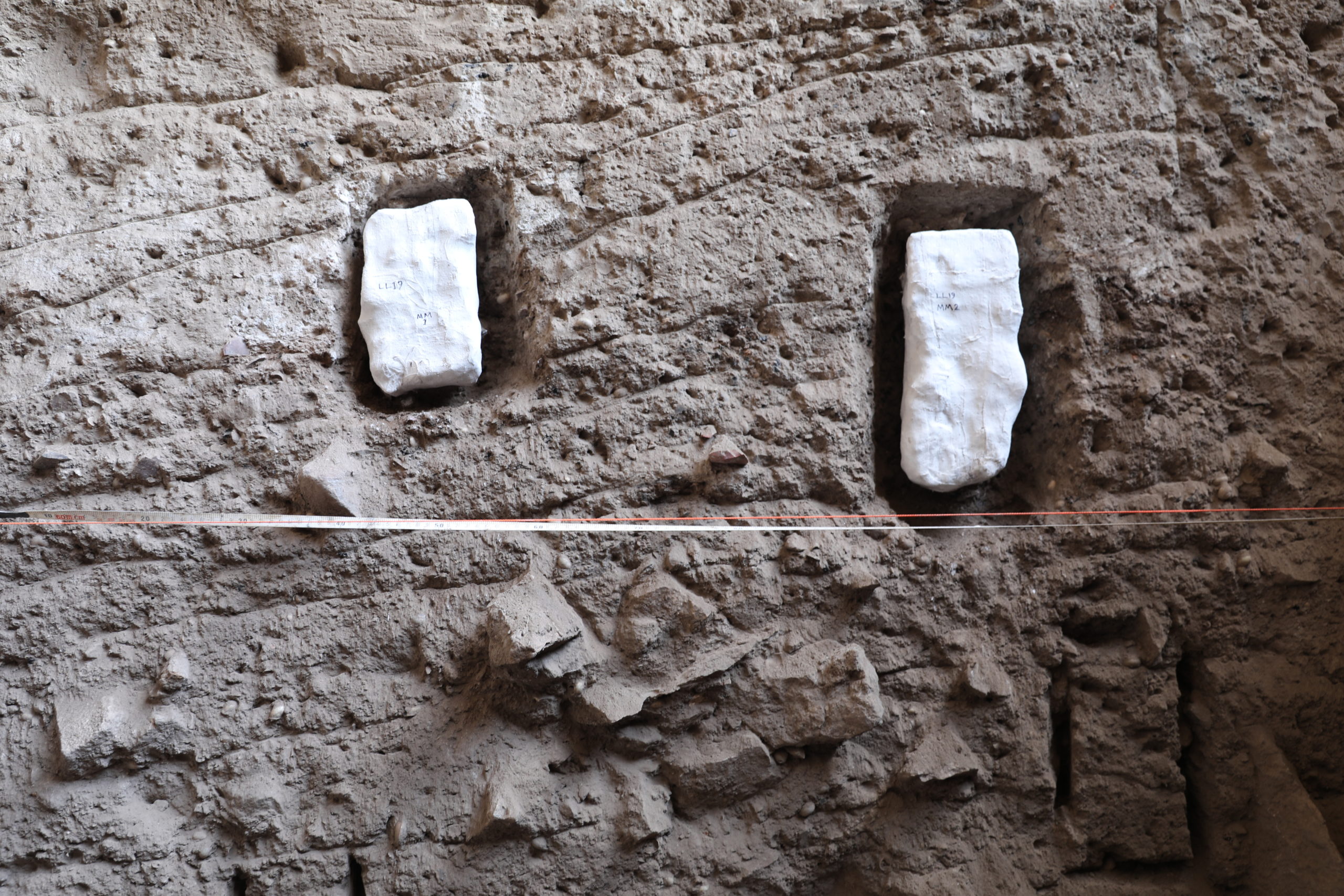
  • Develop a novel integrated approach to the analysis of archaeological sediments and included organic materials, integrating established methods with emerging, state-of-the-art technologies, especially those that permit the non-destructive, spatially-constrained characterisation of intact sediments. Microstratigraphic analyses of sediment blocks retrieved from archaeological sites will allow for a finely spatially- and temporally-resolved reconstruction of past physical and chemical conditions, which can be directly compared with specialist data (e.g. ancient DNA; OSL geochronology) generated from micro-sampled sediments from the same blocks.
  • Generate local palaeoenvironmental and palaeolandscape data from the analysis of sedimentary sequences preserved within—and in the vicinity of—key Southeast Asian archaeological sites. These data will provide a bridge between Late Pleistocene (~125–12,000 years ago) climate-driven geomorphological change and periods of occupation and non-occupation of archaeological sites. By correlating ‘ground conditions’ with the presence or absence of early humans, links between environmental change and cultural records will be explored.
  • Test hypotheses of environmentally driven dispersal on key archaeological sites containing records of the presence of our species and other co-existing Late Pleistocene hominins in Southeast Asia, a region revealing itself as a melting pot of immigration and interbreeding. This will provide vital environmental context to key archaeological records, and the validation of this novel approach employed at sites that genuinely matter.
Two block samples taken from Laili, East Timor.